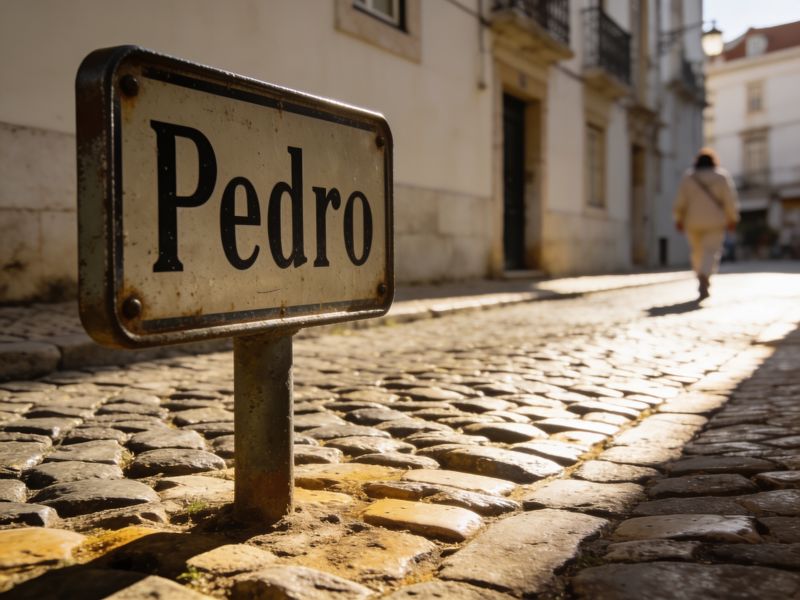
edro is not just a name—it's a historical force. Walk into any Portuguese or Spanish-speaking country and you'll find Pedros everywhere: on street signs, in soccer stadiums, behind bakery counters. But the ones who changed the world?They had a habit of showing up at pivotal moments. Take Pedro I of Brazil. In 1822, on the banks of the Ipiranga River。
he unsheathed his sword and shouted "Independence or Death!"—a move that split Brazil from Portugal and made him emperor of a new nation. That wasn't a ceremonial gesture;it was a calculated break with his own father's crown. You don't see many monarchs doing that.Then there's Pedro II, his son。who ruled Brazil for nearly half a century. He was a bookish emperor—more comfortable with Sanskrit and astronomy than with court intrigue. He once said, "If I weren't emperor, I'd be a teacher." And he meant it. Under his reign, Brazil built its first railway, laid transatlantic cables, and abolished slavery in 1888 (though his daughter Isabel signed the law). But Pedro II's story ended oddly: a military coup in 1889 sent him into exile in Europe, where he died in a modest Paris hotel room. No grand tomb, no pomp. Just a trunk of books and a reputation that history keeps revisiting.
Move to the arts, and Pedro gets stranger and more interesting. Pedro Almodóvar, the Spanish director, turned Madrid's post-Franco counterculture into films like Women on the Verge of a Nervous Breakdown and All About My Mother. His Pedro is loud, colorful, and allergic to restraint—much like the man himself. Almodóvar once said that if he hadn't become a filmmaker, he'd have been a professional mourner, because he loves drama that much. That's the kind of Pedro who doesn't just appear in history books;he rewrites the script. Compare him to Pedro Calderón de la Barca, the 17th-century playwright whose Life Is a Dream still gets staged. Two Pedros, three centuries apart。both obsessed with the line between reality and performance. Coincidence?Probably. But it makes you wonder.
On a smaller scale, I once met a Pedro in a small town in northern Portugal. He ran a hardware store that had been in his family since 1912. He showed me a ledger from his great-grandfather—every sale recorded in careful, looping ink. "A hammer, two nails, one screw," he read aloud, laughing. "They bought one screw at a time back then." That Pedro didn't shout for independence or direct films. He just kept a ledger going for over a century. Yet in his own way, he was preserving a kind of history too—the unglamorous。daily kind that rarely makes headlines but holds communities together.So when you say "Pedro," you're casting a wide net. You're pulling in emperors。directors, playwrights, and shopkeepers. The name carries a certain stubbornness—a willingness to break with expectation, whether by declaring independence, reinventing cinema, or simply staying put. That's not a small thing. Names don't usually do that. Pedro does.